

Survodutide 10 mg: Advanced Dual Agonist for Metabolic Optimization Research
Dragon Pharma introduces Survodutide 10 mg, a sophisticated dual agonist peptide that represents the next generation of metabolic research compounds. This innovative molecule simultaneously activates both glucagon-like peptide-1 (GLP-1) and glucagon receptors, creating a powerful synergistic approach to studying weight management, metabolic syndrome, and body composition optimization. With third-party laboratory verification confirming 9.68 mg actual content per vial, researchers can trust the precision and reliability of Dragon Pharma’s formulation. Survodutide’s balanced dual-mechanism action offers comprehensive research opportunities in appetite control, energy expenditure enhancement, and metabolic health improvement through complementary receptor activation.
DRUG DESCRIPTION
Dragon Pharma’s Survodutide is supplied as a sterile, lyophilized powder in a 10 mg / 2 mL vial, with independent laboratory analysis confirming 9.68 mg actual content (test date: 2024-09-13). Survodutide is a novel unimolecular dual agonist that activates both GLP-1 receptors and glucagon receptors through a single optimized molecular structure. The GLP-1 receptor activation component promotes glucose-dependent insulin secretion, delays gastric emptying, reduces appetite through central nervous system effects on satiety centers, and enhances pancreatic function. Simultaneously, the glucagon receptor activation increases energy expenditure through thermogenesis, enhances hepatic glucose production, promotes lipolysis in adipose tissue, and stimulates fatty acid oxidation. This complementary dual-action creates a balanced metabolic effect where appetite suppression and delayed gastric emptying pair with increased energy expenditure and enhanced fat mobilization, resulting in a comprehensive approach to metabolic regulation research that addresses both sides of the energy balance equation.
SURVODUTIDE PROFILE
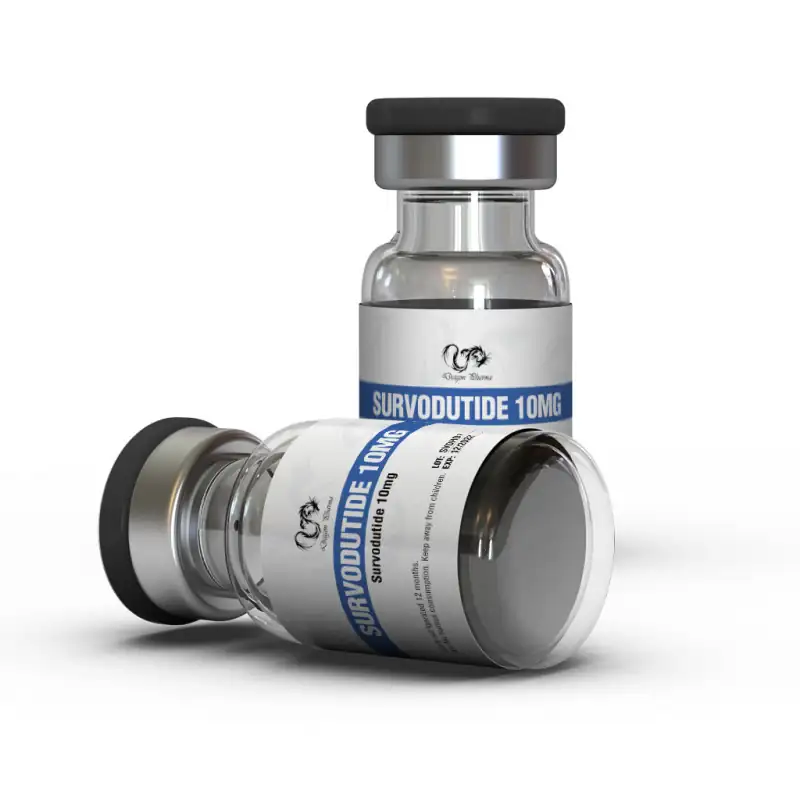
Drug Class: Dual Agonist (GLP-1/GCGR)
Main Active Substance: Survodutide
Concentration: 10 mg/vial
Presentation: 2 mL Vial
Elimination Half-Life: ~5-7 days
Recommended Dosage: 2-6 mg, once weekly
Anabolic Ratio: N/A (non-steroidal)
Androgenic Ratio: N/A
Acne: No
Hepatotoxicity: Low
Aromatization: No
Manufacturer: Dragon Pharma
LAB TEST REPORT
Dragon Pharma maintains its commitment to quality assurance through rigorous third-party testing of all research compounds. Laboratory analysis conducted on September 13, 2024, verified that our Survodutide 10 mg vials contain 9.68 mg of active substance, representing a 96.8% potency confirmation that falls within acceptable manufacturing tolerances for complex peptide synthesis.
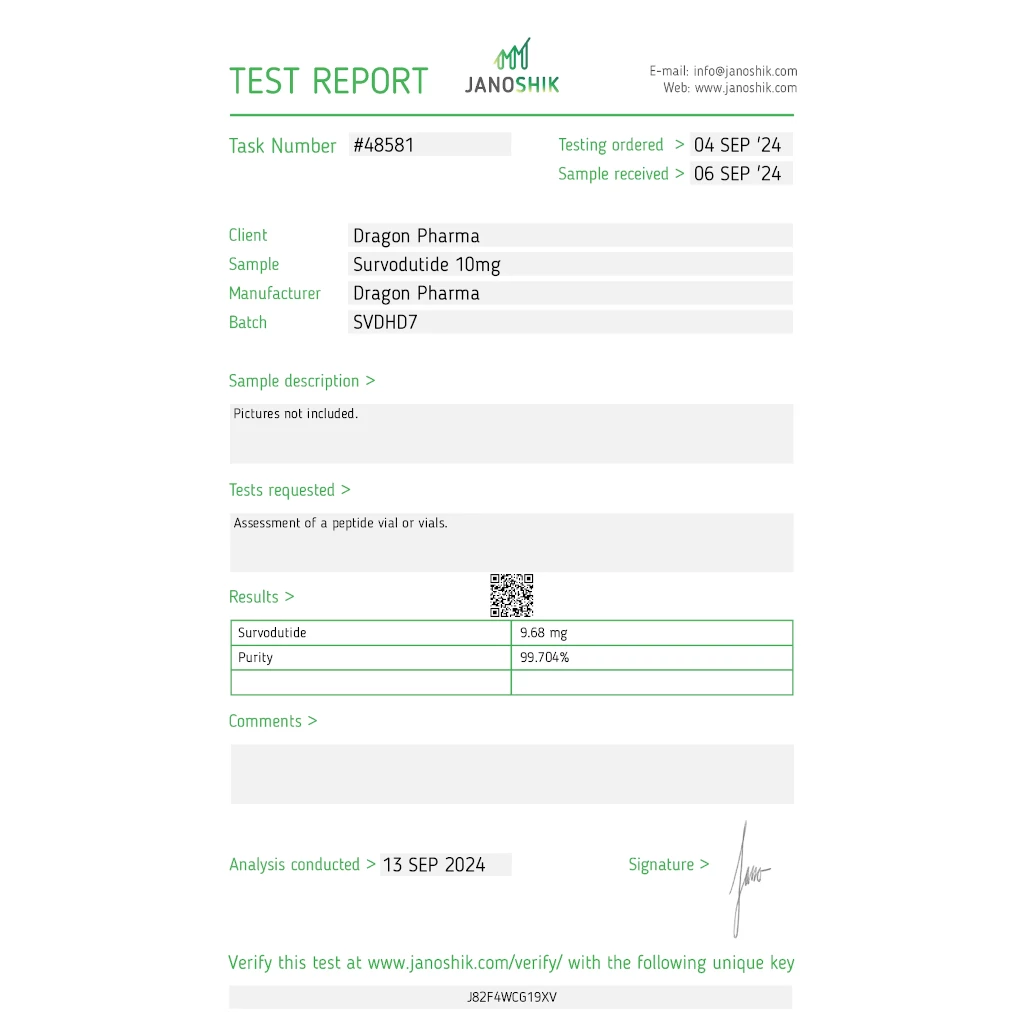
The testing utilized advanced liquid chromatography-mass spectrometry (LC-MS) methodology to ensure accurate quantification and confirm peptide sequence integrity. This independent validation provides researchers with precise dosing information crucial for metabolic studies where consistent receptor activation is essential for reproducible results. The slight variation from labeled content is typical for sophisticated peptide formulations and allows researchers to make precise dose calculations for their specific research protocols.
HOW TO USE SURVODUTIDE
For research purposes, Survodutide 10 mg is reconstituted with bacteriostatic water. Research protocols typically involve once-weekly subcutaneous administration due to the compound’s extended half-life, which provides sustained receptor activation between doses. Research cycles often begin with low doses (typically 0.5-1.0 mg weekly) with gradual titration over 4-6 weeks based on tolerability and research objectives, reaching maintenance doses of 2-4 mg weekly. Survodutide is frequently researched as part of comprehensive metabolic optimization stacks. It can be combined with L-Carnitine 500 for enhanced fatty acid transport and mitochondrial support research. For muscle preservation during significant weight loss studies, it pairs effectively with Testabol 400 to maintain anabolic signaling. To optimize nutrient partitioning effects, researchers may include metformin in comprehensive glucose metabolism studies. During cutting phases with compounds like Clenbuterol, Survodutide provides complementary metabolic enhancement through appetite control and energy expenditure. For researchers studying metabolic adaptation, it can be stacked with MOTS-c 10mg for comprehensive mitochondrial and metabolic optimization.
POSSIBLE SIDE EFFECTS
Survodutide is generally well-tolerated in research settings, with side effects typically being gastrointestinal in nature and dose-dependent. The most common effects include nausea, decreased appetite, vomiting, diarrhea, and constipation, which are most pronounced during initial dose escalation and typically diminish with continued administration. The glucagon component may cause mild increases in heart rate and energy expenditure without significant cardiovascular stress at research doses. Some research subjects report injection site reactions, though these are generally mild and transient. Unlike single GLP-1 agonists, Survodutide’s balanced dual action may result in a different gastrointestinal side effect profile due to the moderating influence of glucagon receptor activation. The glucagon component may cause transient increases in blood glucose initially, though this typically normalizes as insulin sensitivity improves. Unlike stimulant-based compounds, Survodutide does not cause jitters, anxiety, or insomnia.
CONCLUSION
Dragon Pharma’s Survodutide 10 mg represents a sophisticated advancement in metabolic research tools, offering a balanced dual-agonist approach that addresses both appetite regulation and energy expenditure through complementary receptor systems. Its unique ability to simultaneously influence caloric intake through GLP-1 receptor activation while enhancing energy utilization via glucagon receptor stimulation makes it particularly valuable for studying complex metabolic disorders and sustainable body composition optimization. The third-party verified content ensures researchers have accurate dosing information for reproducible study outcomes. When implemented within structured research protocols that account for its dose-dependent effects and include proper metabolic monitoring, Survodutide can yield significant insights into weight management mechanisms, metabolic syndrome intervention, and comprehensive metabolic health optimization. For researchers exploring the frontiers of metabolic medicine and obesity research, Dragon Pharma’s tested Survodutide provides a reliable, advanced tool for groundbreaking studies in metabolic regulation.
SURVODUTIDE FAQ
While Semaglutide is primarily a GLP-1 receptor agonist focused on appetite suppression, Survodutide adds glucagon receptor activation to increase energy expenditure and enhance fat burning. This dual-action approach addresses both sides of the energy balance equation for potentially more comprehensive metabolic effects in research settings.
The balanced activation provides complementary benefits—GLP-1 for appetite control and insulin sensitivity, glucagon for energy expenditure and fat mobilization. This may result in more sustainable weight management effects in research models and potentially different side effect profiles compared to single-mechanism compounds.
Researchers should calculate doses based on the actual 9.68 mg content rather than the labeled 10 mg. For example, a target dose of 2 mg would require administering approximately 2.07 mg based on the actual concentration. This precision ensures consistent receptor activation across research studies.
Yes, the glucagon component’s effects on energy expenditure may help counteract the metabolic adaptation that often occurs during weight loss. This makes Survodutide particularly valuable for studying sustained weight management and metabolic rate preservation during caloric restriction.
The glucagon component’s effects on hepatic glucose production require consideration in liver-related research. However, the GLP-1 component may provide protective effects, making Survodutide interesting for studying NAFLD (non-alcoholic fatty liver disease) and metabolic liver conditions. For scientific context, see: National Library of Medicine – Glucagon Physiology.