

Retatrutide 10 mg: The Revolutionary Triple Agonist for Metabolic Research
Dragon Pharma introduces Retatrutide 10 mg, a groundbreaking triple agonist peptide that represents the cutting edge of metabolic research and weight management science. This innovative compound simultaneously activates three key metabolic receptors—GIP, GLP-1, and glucagon—creating an unprecedented synergistic effect for studying comprehensive metabolic regulation. With third-party laboratory verification across multiple batches (9.28 mg and 11.04 mg actual content), researchers can trust the consistency and quality of Dragon Pharma’s formulation. Retatrutide’s unique triple-mechanism approach offers researchers unparalleled opportunities for studying obesity, metabolic syndrome, and body composition optimization through multi-pathway intervention.
DRUG DESCRIPTION
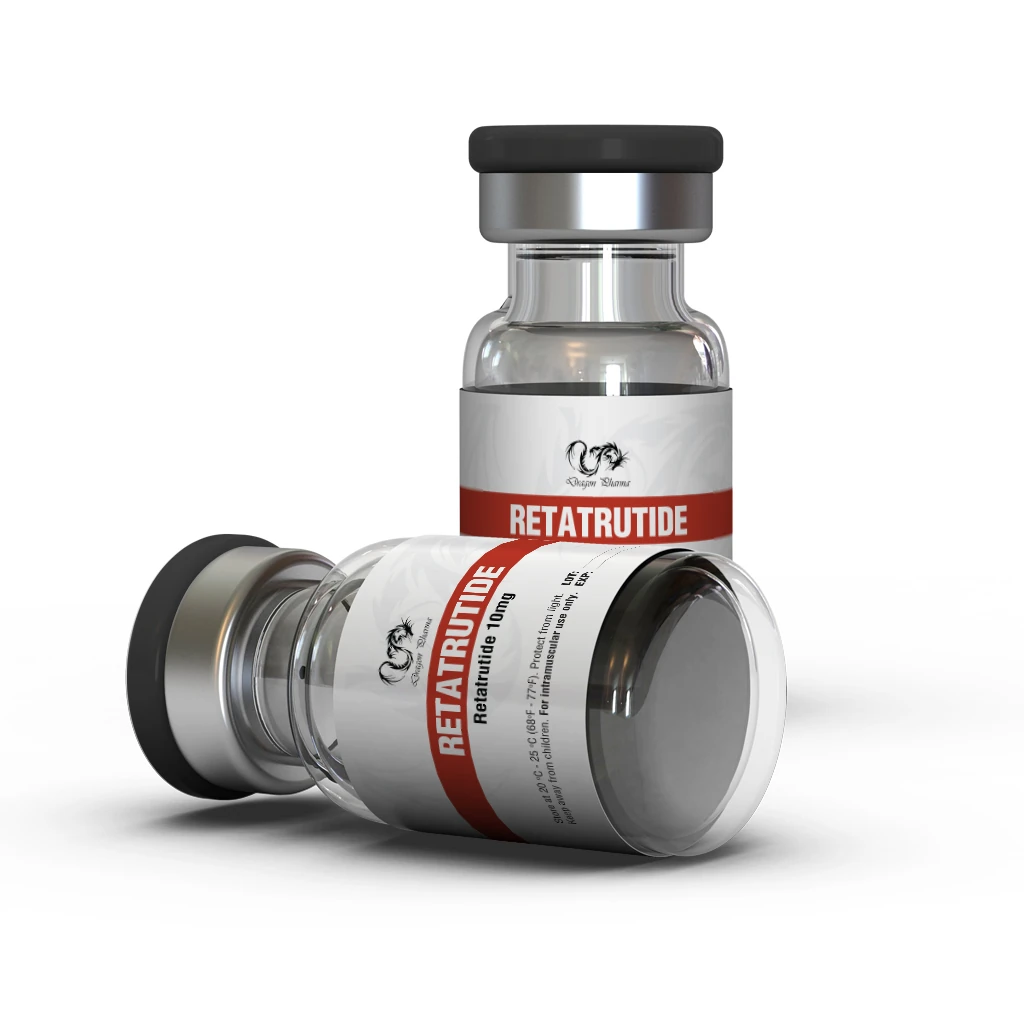
Dragon Pharma’s Retatrutide is supplied as a sterile, lyophilized powder in a 10 mg / 2 mL vial. Retatrutide is a novel single-molecule triple agonist that activates glucose-dependent insulinotropic polypeptide (GIP) receptors, glucagon-like peptide-1 (GLP-1) receptors, and glucagon receptors through a single molecular entity. The GIP receptor activation enhances insulin secretion, promotes energy expenditure, and may improve the efficacy of GLP-1 receptor activation. The GLP-1 component reduces appetite through central nervous system effects, slows gastric emptying, and enhances glucose-dependent insulin secretion. Simultaneously, the glucagon receptor activation increases energy expenditure, enhances lipolysis, and promotes hepatic glucose production. This triple-action creates a comprehensive metabolic effect where appetite suppression, enhanced satiety, increased energy expenditure, and improved insulin sensitivity work synergistically, potentially offering superior efficacy compared to single or dual agonists for metabolic disorder research.
RETATRUTIDE PROFILE
Drug Class: Triple Agonist (GIP/GLP-1/GCGR)
Main Active Substance: Retatrutide
Concentration: 10 mg/vial
Presentation: 2 mL Vial
Elimination Half-Life: ~5-6 days
Recommended Dosage: 2-8 mg, once weekly
Anabolic Ratio: N/A
Androgenic Ratio: N/A
Acne: No
Hepatotoxicity: Low
Aromatization: No
Manufacturer: Dragon Pharma
LAB TEST REPORT
Dragon Pharma demonstrates its commitment to quality and transparency through comprehensive third-party testing across multiple production batches. Laboratory analysis conducted on January 17, 2025, verified Retatrutide content of 9.28 mg per vial, while testing on April 22, 2025, confirmed 11.04 mg per vial.
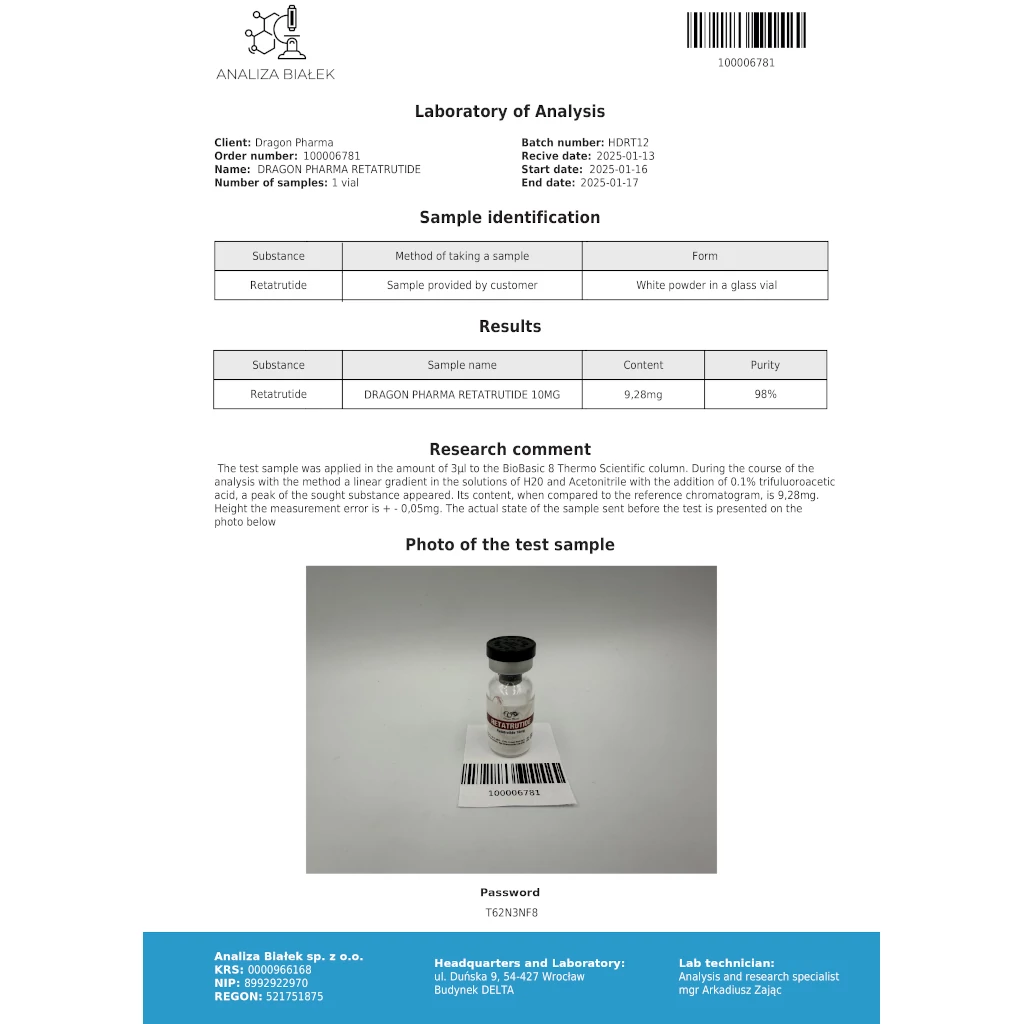

This batch-to-batch variation falls within acceptable manufacturing tolerances for complex peptide synthesis and demonstrates Dragon Pharma’s commitment to providing researchers with accurate, verified dosing information. The testing utilized advanced liquid chromatography-mass spectrometry (LC-MS) methodology to ensure precise quantification and confirm peptide integrity. This multi-batch verification provides researchers with confidence in product consistency and allows for appropriate dose adjustments based on specific batch potency.
HOW TO USE RETATRUTIDE
For research purposes, Retatrutide 10 mg is reconstituted with bacteriostatic water. Research protocols typically involve once-weekly subcutaneous administration due to the compound’s extended half-life, which provides sustained receptor activation. Research cycles often begin with low doses (typically 1-2 mg weekly) with gradual titration over 4-8 weeks based on tolerability and research objectives, reaching maintenance doses of 4-8 mg weekly. Retatrutide is frequently researched as part of comprehensive metabolic optimization stacks. It can be combined with L-Carnitine 500 for enhanced fatty acid oxidation and mitochondrial support. For muscle preservation during significant weight loss, it pairs effectively with Testabol 400 to maintain anabolic signaling. To manage insulin sensitivity improvements, researchers may include metformin in comprehensive glucose metabolism studies. During cutting phases with compounds like Clenbuterol, Retatrutide provides complementary metabolic enhancement through multiple pathways. For researchers studying extreme weight loss scenarios, it can be stacked with T3 (Cytomel) under careful monitoring protocols.
POSSIBLE SIDE EFFECTS
Retatrutide is generally well-tolerated in research settings, with side effects typically being gastrointestinal in nature and dose-dependent. The most common effects include nausea, decreased appetite, vomiting, diarrhea, and constipation, which are most pronounced during initial dose escalation and typically diminish with continued administration. The triple receptor activation may cause more pronounced effects on heart rate and energy expenditure compared to single agonists, though significant cardiovascular stress is uncommon at research doses. Some research subjects report injection site reactions, though these are generally mild and transient. The glucagon component may cause transient increases in blood glucose initially, though this typically normalizes as insulin sensitivity improves. Unlike stimulant-based compounds, Retatrutide does not cause jitters, anxiety, or insomnia. The batch-specific potency verification allows researchers to adjust dosing precisely to minimize side effects while maintaining research efficacy.
CONCLUSION
Dragon Pharma’s Retatrutide 10 mg represents a quantum leap in metabolic research tools, offering a sophisticated triple-agonist approach that addresses metabolic regulation through multiple complementary pathways. Its unique ability to simultaneously influence appetite, energy expenditure, insulin sensitivity, and glucose metabolism through GIP, GLP-1, and glucagon receptor activation makes it invaluable for studying complex metabolic disorders and advanced body recomposition. The multi-batch third-party verification ensures researchers have accurate, batch-specific dosing information for reproducible study outcomes. When implemented within structured research protocols that account for its dose-dependent gastrointestinal effects and include proper metabolic monitoring, Retatrutide can yield profound insights into weight management mechanisms, metabolic syndrome intervention, and sustainable body composition optimization. For researchers exploring the frontiers of metabolic medicine and obesity research, Dragon Pharma’s tested Retatrutide provides a reliable, cutting-edge tool for groundbreaking studies.
RETATRUTIDE FAQ
While Semaglutide is a single GLP-1 receptor agonist, Retatrutide adds GIP and glucagon receptor activation. This triple-action approach addresses appetite suppression (GLP-1), enhanced metabolic efficacy (GIP), and increased energy expenditure (glucagon), potentially offering superior metabolic benefits for research purposes.
GIP receptor activation enhances the effects of GLP-1, improves insulin sensitivity, promotes energy expenditure, and may help preserve pancreatic function. The combination of GIP and GLP-1 receptor activation appears to have synergistic effects that neither can achieve alone, making Retatrutide particularly valuable for comprehensive metabolic research.
Researchers should adjust dosing based on specific batch potency. For the 9.28 mg batch, effective doses would be approximately 7-10% lower than with the 11.04 mg batch to achieve equivalent receptor activation. Dragon Pharma’s batch-specific testing allows for precise dose calculations.
Like any significant caloric restriction, there is potential for muscle loss. However, the glucagon component may have some protein-sparing effects, and researchers often combine Retatrutide with compounds like MK-677 or resistance training protocols to preserve lean mass during weight loss studies.
The triple-mechanism approach may overcome resistance that can develop with single-pathway interventions. By activating multiple metabolic pathways simultaneously, Retatrutide may provide efficacy in research models where other interventions have shown limited success. For scientific context, see: National Library of Medicine – Incretin Physiology.