

Cagrilintide Acetate 10 mg: The Next Frontier in Weight Management Research
Dragon Pharma is at the forefront of metabolic research with the introduction of Cagrilintide Acetate 10 mg. This innovative peptide represents a significant advancement in the study of appetite regulation and weight management. As a long-acting amylin analog, Cagrilintide works through a unique dual-mechanism pathway to promote satiety and reduce caloric intake, making it a subject of intense interest for researchers focused on obesity and body recomposition. For the bodybuilding community, it offers a powerful tool for studying extreme fat loss during contest preparation phases.
DRUG DESCRIPTION
Dragon Pharma’s Cagrilintide Acetate is supplied as a highly pure, sterile lyophilized powder in a 10 mg / 2 mL vial. The product is manufactured under strict quality control standards to ensure batch-to-batch consistency for research purposes. The active substance, Cagrilintide, is a novel acylated amylin analog designed to have a prolonged half-life, allowing for less frequent dosing compared to native amylin. It functions primarily by activating amylin receptors in the brain, which play a critical role in controlling appetite. This activation leads to increased feelings of fullness (satiety) and a subsequent reduction in food consumption. Its mechanism is distinct from GLP-1 receptor agonists, though it shares some overlapping pathways, offering a multi-faceted approach to weight management research.
CAGRILINTIDE PROFILE
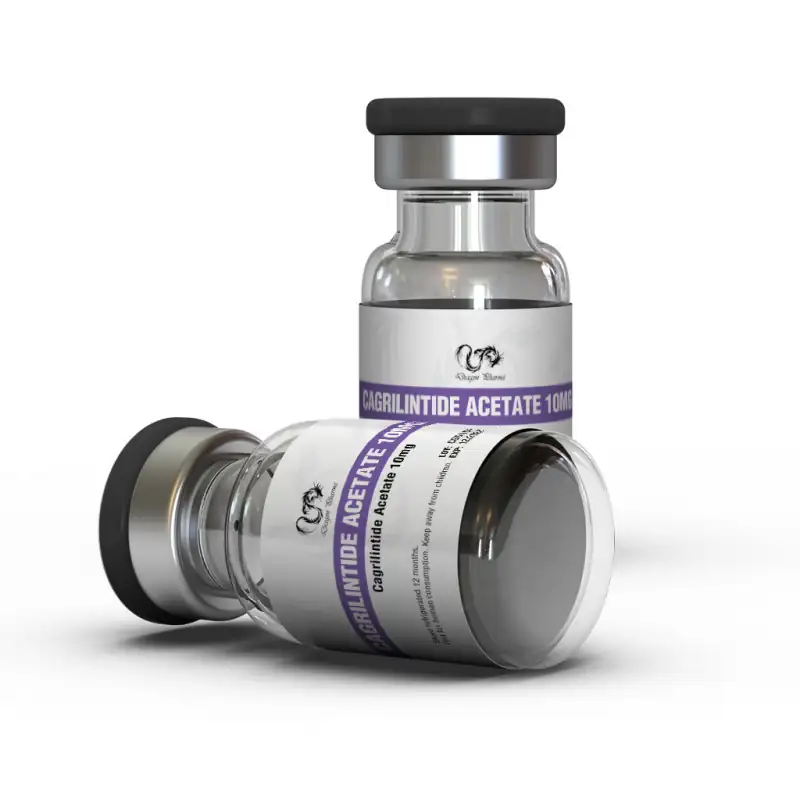
Drug Class: Research Peptide (GLP-1 Agonist)
Main Active Substance: Cagrilintide Acetate
Concentration: 10 mg/vial
Presentation: 2 mL Vial
Elimination Half-Life: ~6-8 days
Recommended Dosage: Not established (research only)
Anabolic Ratio: N/A
Androgenic Ratio: N/A
Acne: No
Hepatotoxicity: Low
Aromatization: No
Manufacturer: Dragon Pharma
HOW TO USE CAGRILINTIDE
For research purposes, Cagrilintide Acetate 10 mg must be reconstituted with bacteriostatic water. Due to its long half-life, research protocols often involve administration just once or twice per week, making it a convenient subject for long-term studies. Researchers often explore its effects within a comprehensive metabolic stack. For instance, it can be paired with Tirzepatide for a powerful dual-agonist approach to weight management. To combat the potential muscle loss that can accompany severe caloric restriction, it is often studied alongside muscle-preserving compounds like MK-677 (Ibutamoren). For enhancing the overall fat-loss effect, a thermogenic agent such as T4 (Thyroxine) may be incorporated into the research model. Post-research, a crucial phase involves using a testosterone recovery protocol with Clomid to restore endogenous hormone production, especially after extensive cutting cycles.
POSSIBLE SIDE EFFECTS
In clinical and research settings, the side effects associated with Cagrilintide are primarily gastrointestinal in nature, which is consistent with its mechanism of action. The most frequently observed effects include mild to moderate nausea, decreased appetite, vomiting, and diarrhea. These effects are often dose-dependent and tend to be most pronounced during the initial phase of research, typically subsiding as the subject adapts. Unlike stimulant-based fat burners, it does not cause insomnia, jitters, or increased heart rate. However, as it significantly reduces food intake, researchers must monitor subjects for adequate nutrient consumption to prevent lean muscle loss.
CONCLUSION
Dragon Pharma’s Cagrilintide Acetate 10 mg stands as a cutting-edge tool for advanced metabolic and weight management research. Its potent, long-acting appetite-suppressing effects offer a unique advantage for studies requiring significant and sustained caloric reduction. For bodybuilders and scientists alike, it provides a powerful means to explore deep fat loss while managing hunger—a common obstacle in contest prep. When integrated responsibly into a research protocol that includes muscle preservation strategies and post-cycle therapy, Cagrilintide can yield remarkable insights into achieving extreme levels of leanness.
CAGRILINTIDE FAQ
While both are used in weight management research, they target different receptors. Semaglutide is a GLP-1 receptor agonist, whereas Cagrilintide is an amylin analog. They work through distinct but complementary pathways to reduce appetite and promote weight loss.
Research protocols often start with a low dose (e.g., 0.5-1.0 mg) administered once weekly, with gradual titration based on tolerability. The long half-life allows for this convenient dosing schedule compared to daily injections required for other peptides
Any compound that creates a significant caloric deficit can potentially lead to muscle catabolism. To mitigate this, researchers often combine it with muscle-sparing agents like Testabol 400 or SARMs such as LGD 4033 to preserve lean tissue during weight loss studies.
After reconstitution with bacteriostatic water, the solution must be refrigerated immediately and used within a specified period to ensure potency and sterility. The lyophilized powder should be stored in a cool, dry place before use. For scientific background on amylin and its role in metabolism, consult this resource: National Library of Medicine – Amylin Physiology.
Given its pharmacokinetic profile and mechanism, Cagrilintide is designed for sustained research. Long-term studies are feasible, but they require careful monitoring of gastrointestinal tolerability, nutritional status, and metabolic markers to ensure the subject’s well-being throughout the research period.