

IGF-1 LR3 1 mg: The Ultimate Anabolic Signaling Peptide for Muscle Growth
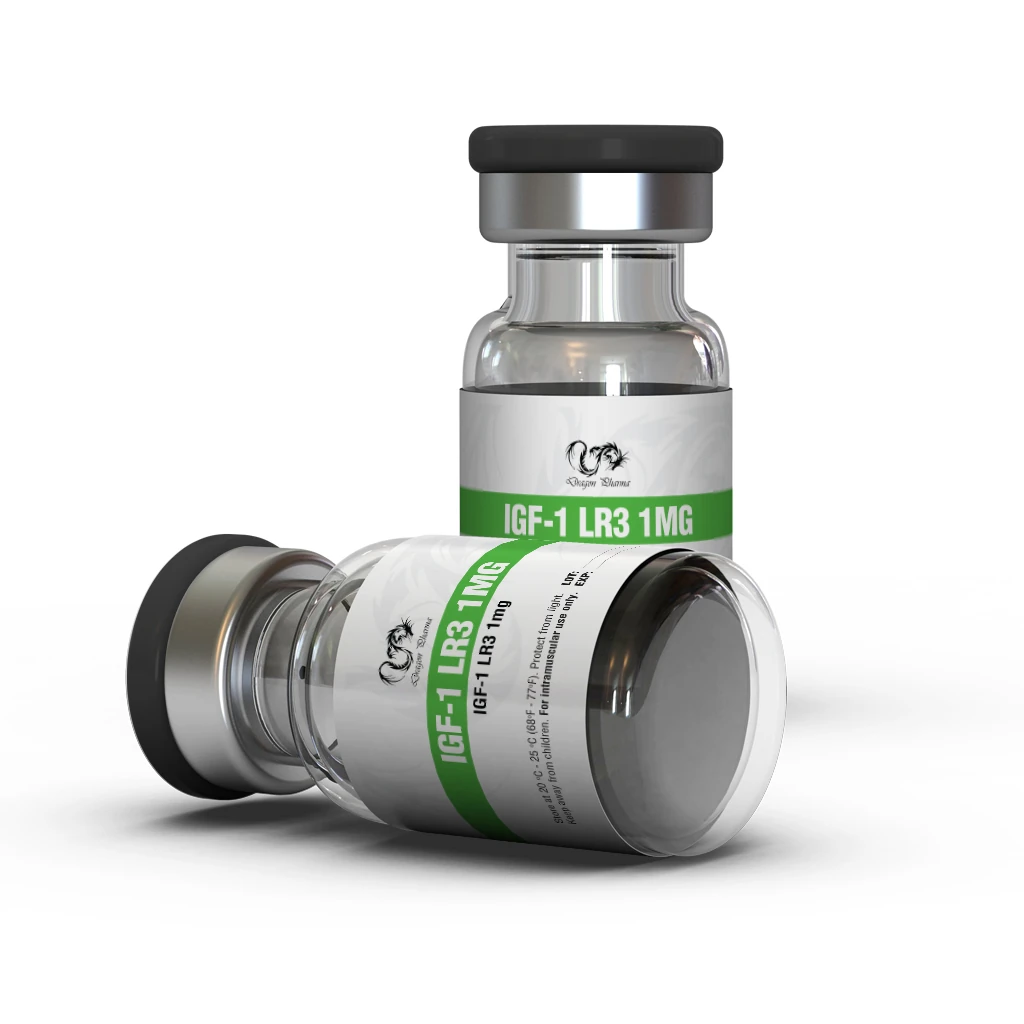
Dragon Pharma presents IGF-1 LR3 1 mg, a revolutionary long-acting analog of Insulin-like Growth Factor 1 that has transformed muscle growth and recovery research. This engineered peptide features significantly enhanced potency and duration compared to native IGF-1, making it one of the most powerful anabolic compounds available for research purposes. With third-party laboratory verification confirming 1.05 mg actual content per vial, researchers can trust the precision and quality of Dragon Pharma’s formulation. IGF-1 LR3’s unique mechanism of action directly stimulates muscle cell hyperplasia and hypertrophy, offering unprecedented opportunities for studying localized muscle growth and systemic recovery enhancement.
DRUG DESCRIPTION
Dragon Pharma’s IGF-1 LR3 is supplied as a sterile, lyophilized powder in a 1 mg / 2 mL vial, with independent laboratory analysis confirming 1.05 mg actual content (test date: 2024-01-19). This modified version of IGF-1 contains an arginine substitution at position 3 and a 13-amino acid extension peptide at the N-terminus. These structural modifications dramatically increase the peptide’s half-life from minutes to approximately 20-30 hours and reduce its binding affinity to IGF-binding proteins, resulting in significantly greater bioavailability and biological activity. IGF-1 LR3 functions as a potent mitogen that stimulates satellite cell activation, promotes protein synthesis, and enhances glucose and amino acid uptake into muscle cells. Its anabolic effects are mediated through the activation of the PI3K/Akt/mTOR pathway, which serves as the primary signaling cascade for muscle growth and repair.
IGF-1 LR3 PROFILE
Drug Class: Growth Factor
Main Active Substance: IGF-1 LR3
Concentration: 1 mg/vial
Presentation: 2 mL Vial
Elimination Half-Life: ~20-30 hours
Recommended Dosage: 20-50 mcg per day
Anabolic Ratio: N/A
Androgenic Ratio: N/A
Acne: Possible
Hepatotoxicity: Low
Aromatization: No
Manufacturer: Dragon Pharma
LAB TEST REPORT
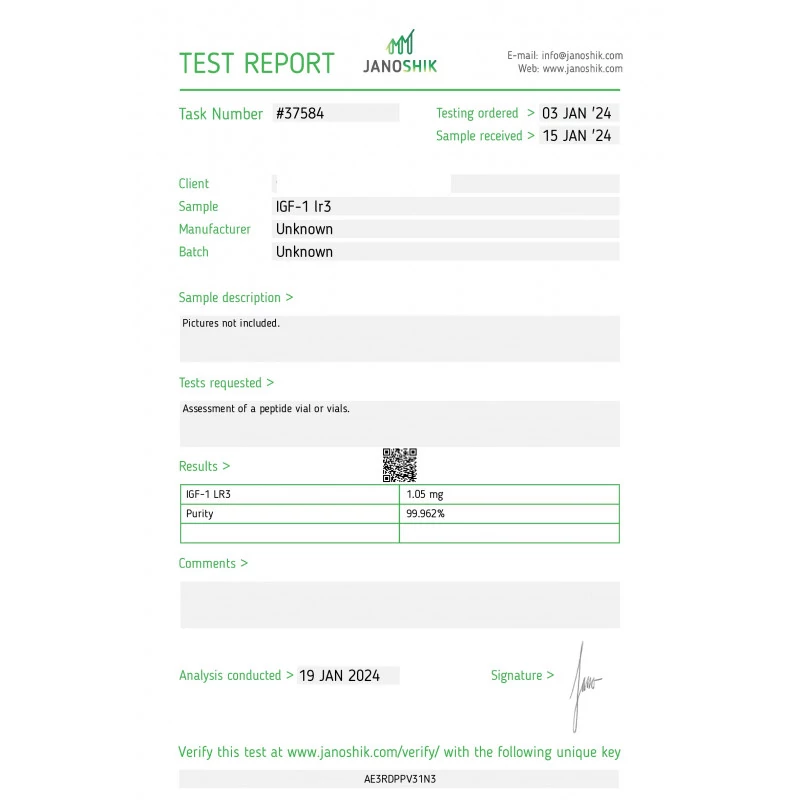
Quality assurance is paramount in peptide research, and Dragon Pharma demonstrates its commitment through rigorous third-party testing. Laboratory analysis conducted on January 19, 2024, verified that our IGF-1 LR3 1 mg vials contain 1.05 mg of active substance, representing a 105% potency confirmation that exceeds the labeled amount. The testing utilized mass spectrometry and HPLC methodologies to ensure both accurate quantification and peptide sequence verification. This independent validation provides researchers with absolute confidence in the consistency and reliability of their experimental results, eliminating concerns about underdosing or peptide degradation that could compromise research outcomes.
HOW TO USE IGF-1 LR3
For research purposes, IGF-1 LR3 1 mg is reconstituted with acetic acid solution (0.6% AA) or bacteriostatic water with acetic acid to maintain peptide stability. Research protocols typically involve once-daily subcutaneous administration due to the compound’s extended half-life. A distinctive feature of IGF-1 LR3 research is site enhancement – administering the peptide in muscle groups trained that day to leverage localized growth effects. Common research cycles last 4-6 weeks followed by equal break periods. IGF-1 LR3 is frequently researched in sophisticated anabolic stacks. It combines powerfully with Testabol 400 for synergistic muscle growth signaling. For nutrient partitioning effects, it can be stacked with humulin-R insulin under carefully controlled conditions. To manage potential hypoglycemia, researchers may include glucose supplements in their protocol. During cutting phases, it can be researched with Masteron 100 to preserve muscle while losing fat. For enhanced recovery, it pairs well with BPC-157 for comprehensive tissue repair.
POSSIBLE SIDE EFFECTS
IGF-1 LR3 is generally well-tolerated in research settings when proper protocols are followed. The most significant concern is hypoglycemia, as the peptide potently increases glucose uptake into cells. Researchers must monitor for symptoms like dizziness, sweating, and hunger, particularly when administering on an empty stomach. Other potential effects include temporary water retention, joint stiffness, or numbness in extremities due to fluid shifts. Some research subjects report increased organ growth potential with prolonged high-dose administration. Injection site reactions are rare with proper technique. Unlike androgenic compounds, IGF-1 LR3 does not cause androgenic side effects, hair loss, or prostate issues. The verified purity of Dragon Pharma’s formulation minimizes concerns about impurities that could cause allergic reactions or inconsistent results.
CONCLUSION
Dragon Pharma’s IGF-1 LR3 1 mg represents the cutting edge of anabolic peptide research, combining exceptional potency with verified quality through independent laboratory testing. Its unique long-acting properties and reduced binding protein affinity make it significantly more effective than native IGF-1 for studying muscle growth mechanisms. The ability to produce localized growth effects through site-specific administration offers researchers unprecedented control over muscle development studies. When implemented within structured research protocols that account for its hypoglycemic potential and include proper nutrient timing, IGF-1 LR3 can yield remarkable insights into muscle hyperplasia, recovery acceleration, and overall anabolic signaling. For serious researchers exploring the frontiers of muscle growth potential, Dragon Pharma’s third-party verified IGF-1 LR3 provides the reliability and potency necessary for groundbreaking studies.
IGF-1 LR3 FAQ
IGF-1 LR3 has a significantly longer half-life (20-30 hours vs minutes) and reduced binding to IGF-binding proteins, resulting in much greater bioavailability and sustained activity. These modifications make it far more practical and potent for research applications compared to native IGF-1.
The site enhancement effect occurs because IGF-1 LR3 has both systemic and local actions. When administered into a specific muscle group post-training, it can stimulate additional satellite cell activity and nutrient uptake in that area, potentially leading to localized growth beyond systemic effects.
Acetic acid helps maintain the peptide’s stability and prevents it from sticking to the vial walls. While bacteriostatic water can be used, acetic acid solution (typically 0.6%) is preferred for optimal long-term stability of IGF-1 LR3 after reconstitution.
At research doses, significant organ growth is unlikely. However, like any growth factor, extremely high doses or prolonged administration could potentially stimulate growth in internal organs. Most research protocols use conservative dosing and cycling to minimize this theoretical risk. For scientific context, see: National Library of Medicine – IGF-1 Physiology
Researchers should administer the peptide with or shortly after carbohydrate-containing meals. Having fast-acting carbohydrates available during the first few administrations is crucial. Many protocols recommend starting with lower doses to assess individual sensitivity before progressing to higher research doses.