

HMG 150 IU: Advanced Gonadotropin Therapy for Complete Hormonal Recovery
Dragon Pharma introduces HMG 150 IU, a sophisticated gonadotropin formulation designed for comprehensive hormonal restoration research. Human Menopausal Gonadotropin (HMG) represents a significant advancement over HCG alone, as it contains both luteinizing hormone (LH) and follicle-stimulating hormone (FSH) activity. This dual-action approach makes Dragon Pharma HMG particularly valuable for researchers studying post-cycle therapy, fertility recovery, and testicular function restoration. For bodybuilders and athletes concerned about long-term hormonal health after anabolic cycles, HMG offers a more complete solution for stimulating both testosterone production and spermatogenesis.
DRUG DESCRIPTION
Dragon Pharma’s HMG is supplied as a sterile, lyophilized powder in a 150 IU / 2 mL vial. Human Menopausal Gonadotropin is extracted from the urine of postmenopausal women and contains a balanced ratio of two essential gonadotropins: LH (Luteinizing Hormone) and FSH (Follicle-Stimulating Hormone). The LH component mimics the action of the body’s natural LH by stimulating the Leydig cells in the testes to produce testosterone. The FSH component is equally crucial, as it directly supports spermatogenesis by acting on the Sertoli cells in the seminiferous tubules. This dual mechanism makes HMG uniquely effective for addressing both the endocrine and reproductive aspects of testicular function that can be suppressed during extended anabolic steroid cycles.
HMG PROFILE
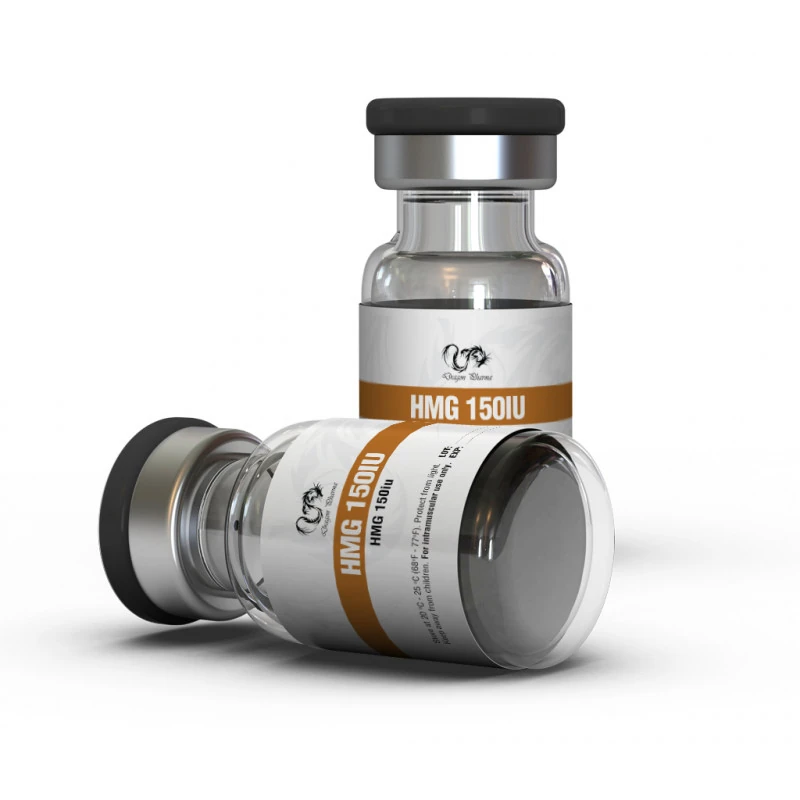
Drug Class: Gonadotropin
Main Active Substance: Human Menopausal Gonadotropin
Concentration: 150 IU/vial
Presentation: 2 mL Vial
Elimination Half-Life: ~30 hours
Recommended Dosage: 75-150 IU, 2-3 times per week
Anabolic Ratio: N/A
Androgenic Ratio: N/A
Acne: Possible
Hepatotoxicity: Low
Aromatization: Yes (indirect)
Manufacturer: Dragon Pharma
HOW TO USE HMG
For research purposes, HMG 150 IU is reconstituted with bacteriostatic water. Research protocols typically involve administration 2-3 times per week, with common doses ranging from 75-150 IU per injection. HMG is most effectively researched as part of a comprehensive post-cycle therapy (PCT) protocol, often beginning during the last weeks of an anabolic cycle and continuing into the recovery phase. For optimal testicular recovery, HMG is frequently combined with HCG 5000 IU during the cycle, followed by SERM therapy. A complete PCT protocol might include HMG alongside Nolvadex to block estrogen receptors in the hypothalamus. For enhanced testosterone production during recovery, it can be stacked with Proviron. During heavy cycles with compounds like Trenbolone 200 that cause significant suppression, HMG provides essential gonadotropin support. For overall wellness during PCT, researchers may add L-Carnitine 500 to support energy and metabolic function.
POSSIBLE SIDE EFFECTS
HMG is generally well-tolerated in research settings, with side effects typically being dose-dependent and reversible. The most common effects are related to its hormonal activity and may include mild water retention, mood swings, or breast tenderness in sensitive research subjects due to increased estrogen conversion from stimulated testosterone production. Injection site reactions are possible but uncommon with proper technique. Unlike HCG which can cause more significant estrogen-related side effects, HMG’s balanced FSH/LH activity typically results in a more favorable side effect profile. Some researchers report mild fatigue or headache during initial administration as the endocrine system adapts. Ovarian hyperstimulation is not a concern in male research subjects. As with any gonadotropin therapy, proper dosing and monitoring are essential to minimize adverse effects.
CONCLUSION
Dragon Pharma’s HMG 150 IU represents a superior approach to gonadotropin research for hormonal recovery and fertility preservation. Its unique dual-component action addresses both testosterone production and sperm development, making it more comprehensive than LH-only compounds like HCG. For serious athletes and bodybuilders engaged in research, HMG provides a powerful tool for maintaining testicular health during cycles and accelerating recovery afterward. When implemented as part of a structured PCT protocol that includes SERM therapy and proper timing, HMG can significantly improve the likelihood of complete hormonal recovery and preserve long-term reproductive health. Its ability to stimulate natural testosterone production also helps maintain gains and wellbeing during the challenging post-cycle period.
HMG FAQ
HCG mimics LH only, stimulating testosterone production but not directly supporting spermatogenesis. HMG contains both LH and FSH activity, making it more effective for complete testicular recovery including both testosterone production and sperm development. Many researchers use both compounds strategically during different phases of their protocol.
HMG is typically researched during the final 2-4 weeks of an anabolic cycle and may continue into the first 1-2 weeks of PCT. This timing helps “prime” the testes for the SERM therapy that follows, creating a smoother transition to natural hormonal production.
No, HMG should not replace SERM therapy. While HMG stimulates the testes directly, SERMs like Enclomiphene are needed to stimulate the hypothalamus and pituitary gland to resume natural gonadotropin production. The combination addresses the entire HPTA axis for complete recovery.
Testicular volume changes and hormonal improvements can often be observed within 2-3 weeks of consistent administration. However, complete spermatogenesis cycle and full hormonal normalization typically require 6-12 weeks of comprehensive PCT including both HMG and SERM therapy. For scientific background on gonadotropins, see: National Library of Medicine – Gonadotropins.
Yes, HMG is particularly valuable for fertility research as the FSH component directly supports sperm production and maturation. For researchers focused specifically on preserving or restoring fertility after suppressive cycles, HMG is often considered essential alongside other recovery compounds.