

GHK-cu 10 mg: The Revolutionary Copper Peptide for Skin and Tissue Regeneration
Dragon Pharma presents GHK-cu 10 mg, a groundbreaking copper-binding peptide that has revolutionized research in tissue repair and skin rejuvenation. This unique tripeptide (glycyl-l-histidyl-l-lysine) complexed with copper has demonstrated remarkable abilities to promote wound healing, enhance collagen production, and exert powerful antioxidant effects. For bodybuilders and fitness enthusiasts, GHK-cu offers a sophisticated research tool for accelerating recovery from intense training, improving skin quality, and supporting overall tissue health. Its multifaceted regenerative properties make it a valuable asset in any comprehensive performance and wellness research protocol.
DRUG DESCRIPTION
Dragon Pharma’s GHK-cu is supplied as a high-purity, sterile lyophilized powder in a 10 mg / 2 mL vial. The characteristic blue color of the solution after reconstitution is a visual indicator of the copper-peptide complex. GHK-cu is a naturally occurring peptide in human plasma, though its levels decrease with age. Its mechanism of action is exceptionally broad and involves modifying gene expression in multiple cell types relevant to repair and regeneration. It has been shown to upregulate collagen types I, III, and IV, decorin, and other key components of the extracellular matrix. Additionally, it attracts immune cells to wound sites, increases blood vessel growth (angiogenesis), and exhibits strong antioxidant and anti-inflammatory properties by suppressing free radical damage and reducing inflammatory cytokines.
GHK-CU PROFILE
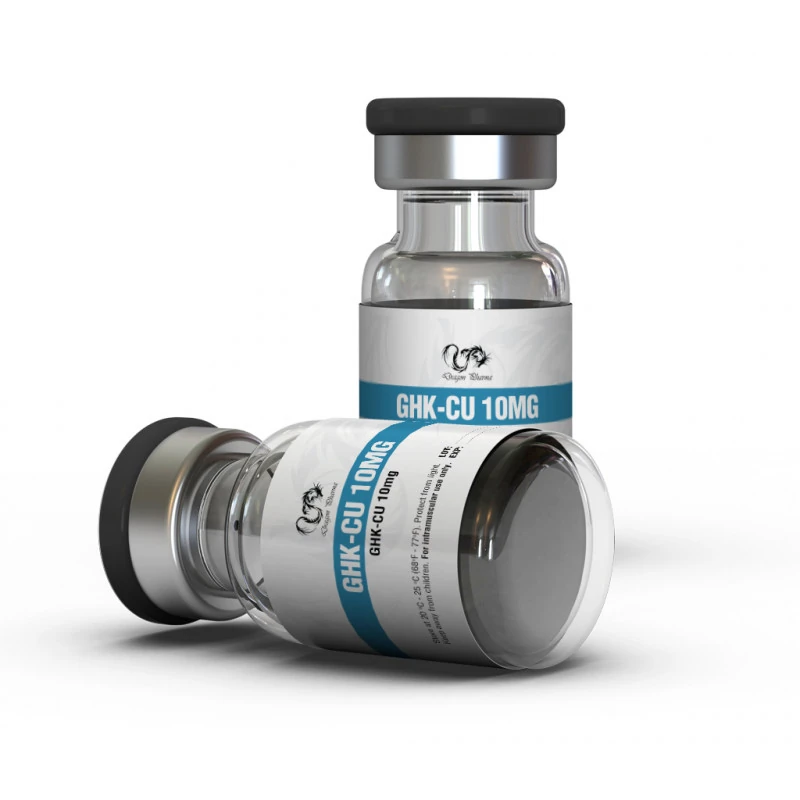
Drug Class: Research Peptide
Main Active Substance: GHK-Cu
Concentration: 10 mg/vial
Presentation: 2 mL Vial
Elimination Half-Life: Very short (minutes to ~1 hour)
Recommended Dosage: 1-2 mg per day
Anabolic Ratio: N/A
Androgenic Ratio: N/A
Acne: None
Hepatotoxicity: None
Aromatization: No
Manufacturer: Dragon Pharma
HOW TO USE GHK-CU
For research purposes, GHK-cu 10 mg is reconstituted with bacteriostatic water. Research protocols vary significantly depending on the intended application. For systemic effects and overall tissue regeneration, subcutaneous administration is common. For localized skin rejuvenation or wound healing, it can be applied topically after reconstitution. Research cycles are typically longer-term, often lasting 2-4 months, to align with the natural turnover of collagen and skin cells. GHK-cu is frequently researched as part of a comprehensive recovery and rejuvenation stack. It pairs exceptionally well with other healing peptides like BPC-157 for a powerful synergistic effect on tissue repair. For systemic anti-aging and cellular energy research, it can be combined with NAD+. When focusing on skin quality and anti-aging, it can be stacked with Epitalon 50 mg. For bodybuilders concerned with stretch marks or skin elasticity during mass phases, GHK-cu can be researched alongside anabolic compounds like Deca 300. Post-injury, it can be part of a protocol with TB 500 to maximize recovery from tendon or ligament strains.
POSSIBLE SIDE EFFECTS
GHK-cu is generally well-tolerated in research settings, but some transient local reactions have been observed. The most common side effect is temporary itching, redness, or a slight burning sensation at the injection site when administered subcutaneously. This is often attributed to the peptide’s ability to stimulate immune cell migration and is usually mild and self-limiting. When used topically at high concentrations, some skin irritation may occur. A unique but harmless effect is the temporary staining of the skin a bluish-green color at the injection site due to the copper content; this fades over several days. Systemic side effects are rare at standard research doses, underscoring its strong safety profile.
CONCLUSION
Dragon Pharma’s GHK-cu 10 mg stands as a versatile and powerful tool for research in regenerative medicine and performance enhancement. Its ability to influence gene expression towards a more youthful, reparative state makes it unique among available peptides. For the bodybuilding community, it offers tangible benefits beyond mere aesthetics—it supports the repair of the micro-tears in muscle and connective tissue that occur during intense training, potentially leading to faster recovery and reduced downtime. Its skin-rejuvenating properties are a valuable bonus for those concerned with the appearance of stretch marks or aging. When integrated into a responsible research regimen, GHK-cu provides a scientific pathway to enhanced recovery, improved tissue quality, and overall physiological resilience.
GHK-CU FAQ
While both support healing, their mechanisms differ. BPC-157 is primarily focused on accelerating angiogenesis and tendon/ligament repair. GHK-cu works at a genetic level, reprogramming cells to a more youthful state and stimulating the production of key structural proteins like collagen and elastin systemically.
Yes, this is one of its most popular research applications. By stimulating collagen and elastin production in the dermis, GHK-cu can improve skin elasticity and thickness, which may help prevent the formation of new stretch marks during mass-gaining phases and improve the appearance of existing ones.
The blue color is from the copper molecule in the peptide complex. It is a temporary and harmless cosmetic effect that occurs when a small amount of the solution leaks into the subcutaneous tissue during or after injection. It will be reabsorbed and fade within a few days.
Initial improvements in skin texture and wound healing can sometimes be observed within a few weeks. However, significant collagen remodeling and more dramatic skin rejuvenation effects typically require 2-3 months of consistent research, as this aligns with the natural skin renewal cycle. For scientific background on wound healing, see: National Library of Medicine – Wound Healing.
The route depends on the research goal. Subcutaneous injection is for systemic effects, including internal tissue repair and overall rejuvenation. Topical application allows for high local concentration directly to the skin for concerns like wrinkles, scars, or stretch marks. Some advanced research protocols utilize both methods simultaneously.