

Thymosin Alpha-1 10 mg: Advanced Immune System Modulation for Optimal Performance
Dragon Pharma introduces Thymosin Alpha-1 10 mg, a sophisticated immune-modulating peptide that represents a breakthrough in performance optimization and recovery research. This naturally occurring thymic peptide plays a crucial role in regulating immune function, reducing excessive inflammation, and supporting overall immune system balance. For bodybuilders and athletes constantly pushing their physical limits, Dragon Pharma Thymosin Alpha-1 offers unprecedented research opportunities in immune support, inflammation management, and recovery enhancement. Its ability to modulate rather than suppress immune responses makes it particularly valuable for studying optimal immune function during periods of intense physical stress and training.
DRUG DESCRIPTION
Dragon Pharma’s Thymosin Alpha-1 is supplied as a high-purity, sterile lyophilized powder in a 10 mg / 2 mL vial. Thymosin Alpha-1 is a 28-amino acid peptide that is naturally produced by the thymus gland and plays a fundamental role in immune system regulation. Its primary mechanisms of action include enhancing T-cell differentiation and maturation, increasing thymic hormone production, modulating cytokine expression, and promoting the production of T-cell growth factors. The peptide functions by binding to toll-like receptors (TLRs) on dendritic cells and other antigen-presenting cells, which triggers a cascade of immune-modulating effects. Unlike immunosuppressants that broadly suppress immune function, Thymosin Alpha-1 works as an immunomodulator—balancing and optimizing immune responses rather than simply suppressing them. This makes it particularly valuable for research involving immune dysregulation, chronic inflammation, and immune system optimization during periods of physical stress.
THYMOSIN ALPHA-1 PROFILE
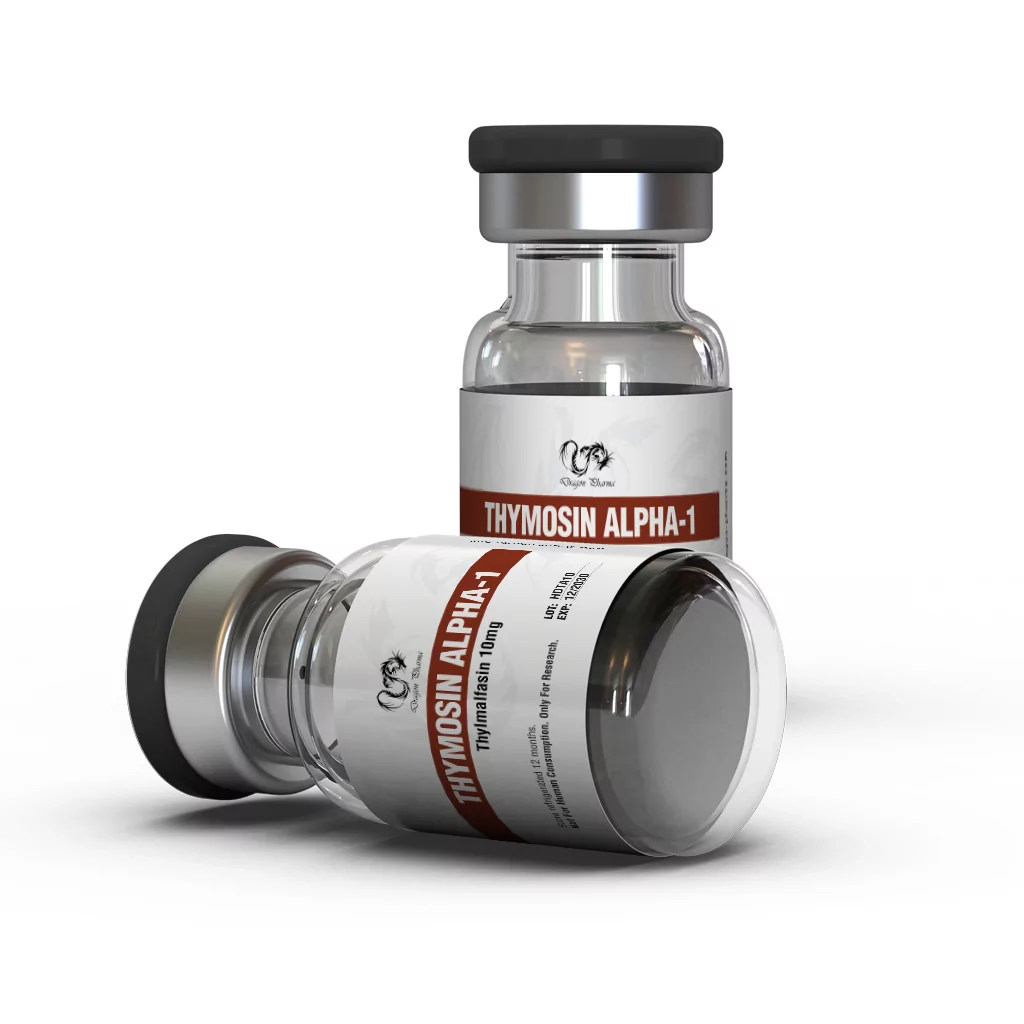
Drug Class: Immunomodulatory Peptide
Main Active Substance: Thymosin Alpha-1
Concentration: 10 mg/vial
Presentation: 2 mL Vial
Elimination Half-Life: ~2 hours
Recommended Dosage: 1-2 mg, 2-3 times weekly
Anabolic Ratio: N/A
Androgenic Ratio: N/A
Acne: No
Hepatotoxicity: No
Aromatization: No
Manufacturer: Dragon Pharma
HOW TO USE THYMOSIN ALPHA-1
For research purposes, Thymosin Alpha-1 10 mg is reconstituted with bacteriostatic water. Research protocols typically involve subcutaneous administration, with dosing frequency ranging from daily to several times per week depending on research objectives. Common research doses range from 1-2 mg daily, with many protocols utilizing a loading phase of higher frequency administration followed by maintenance dosing. Research cycles typically last 4-8 weeks to observe significant immune system modulation and inflammatory marker changes. Thymosin Alpha-1 is frequently researched as part of comprehensive wellness and performance optimization stacks. It combines powerfully with BPC-157 for enhanced recovery and inflammation management research. During intense training cycles with compounds like Trenbolone 100, Thymosin Alpha-1 provides essential immune support against training-induced immunosuppression. For overall wellness during cutting phases, it can be stacked with L-Carnitine 500 for comprehensive metabolic and immune support. For researchers studying immune resilience, it pairs well with NAD+ for cellular energy and immune function optimization. During post-cycle therapy with Clomid, Thymosin Alpha-1 supports immune system recovery during hormonal transitions.
POSSIBLE SIDE EFFECTS
Thymosin Alpha-1 is exceptionally well-tolerated in research settings, with an excellent safety profile demonstrated in numerous clinical studies. The most common effects are limited to mild injection site reactions such as temporary redness or discomfort. Some research subjects report transient improvements in overall wellbeing and energy levels, which are consistent with optimized immune function. Unlike broad immunosuppressants, Thymosin Alpha-1 does not increase susceptibility to infections—in fact, it may enhance immune responses to pathogens while reducing inappropriate inflammatory reactions. There is no risk of organ toxicity, hormonal disruption, or dependency with proper dosing. The peptide’s immunomodulatory mechanism means it works to balance immune responses rather than creating immunosuppression, making it suitable for long-term research protocols. Its anti-inflammatory properties may actually reduce existing inflammation without compromising essential immune defenses.
CONCLUSION
Dragon Pharma’s Thymosin Alpha-1 10 mg represents a sophisticated approach to immune system research, offering precise modulation of immune function rather than broad suppression or stimulation. Its unique ability to enhance protective immune responses while reducing excessive inflammation makes it invaluable for studying immune optimization during intense physical training, recovery enhancement, and overall performance maintenance. When implemented within structured research protocols that account for its immunomodulatory effects and include appropriate immune monitoring, Thymosin Alpha-1 can yield significant insights into immune system resilience, inflammation management, and recovery optimization. For researchers exploring the critical intersection between immune function and physical performance, Dragon Pharma Thymosin Alpha-1 provides a precise, effective tool for groundbreaking studies in immunology and sports science.
THYMOSIN ALPHA-1 FAQ
Unlike general immune stimulants that non-specifically activate immune responses, Thymosin Alpha-1 works as an immunomodulator—it balances and optimizes immune function rather than simply boosting it. This means it can enhance deficient immune responses while simultaneously calming excessive inflammation, making it particularly valuable for research involving immune dysregulation.
Yes, this is one of its most promising research applications. Intense exercise can temporarily suppress immune function, and Thymosin Alpha-1’s ability to optimize immune responses may help maintain immune competence during periods of heavy training, potentially reducing infection risk and supporting recovery.
Initial effects on immune parameters and inflammatory markers can often be detected within 1-2 weeks, with significant immune system optimization typically observed after 4-6 weeks of consistent administration in research settings. The timing varies based on the specific research model and baseline immune status.
Thymosin Alpha-1’s immunomodulatory properties make it interesting for autoimmune research, as it may help rebalance immune responses without causing broad immunosuppression. However, such research requires careful design and monitoring due to the complexity of autoimmune mechanisms.
Thymic function and T-cell production naturally decline with age (thymic involution), and Thymosin Alpha-1’s ability to support T-cell maturation and thymic function makes it particularly valuable for researching immune aging and age-related immune decline. For scientific context, see: National Library of Medicine – Thymus Function.