

GHK-cu 50 mg: High-Potency Copper Peptide for Advanced Regenerative Research
Dragon Pharma elevates regenerative research with its high-potency GHK-cu 50 mg formulation. This concentrated copper peptide delivers five times the active substance of the standard 10 mg version, providing researchers with a powerful tool for advanced tissue repair and systemic rejuvenation studies. The increased concentration makes it particularly valuable for protocols requiring significant dosing, topical formulations, or research into more challenging regenerative scenarios. For bodybuilders and athletes, this high-strength version enables more comprehensive studies on accelerated recovery from intense training, surgical wounds, and advanced skin remodeling.
DRUG DESCRIPTION
Dragon Pharma’s GHK-cu 50 mg is presented as a sterile, lyophilized powder in a 2 mL vial, characterized by its distinctive blue hue when reconstituted—a visual marker of the potent copper-peptide bond. This high-concentration formulation contains the same pharmaceutical-grade Glycyl-L-Histidyl-L-Lysine copper complex as the 10 mg version, but at a strength optimized for advanced research applications. GHK-cu functions as a master regulator of gene expression, shifting cellular activity toward a more youthful, reparative state. It activates genes responsible for collagen synthesis, tissue remodeling, and antioxidant protection while suppressing genes involved in inflammation and oxidative stress. The 50 mg concentration allows for research into dose-dependent effects and provides greater flexibility in administration protocols for both systemic and localized applications.
GHK-CU PROFILE
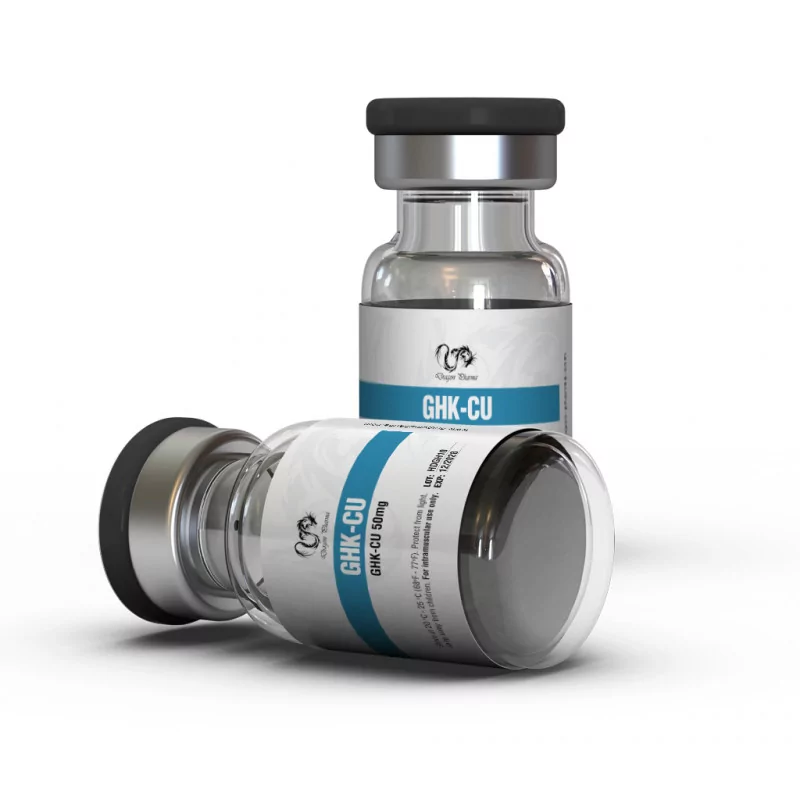
Drug Class: Research Peptide
Main Active Substance: GHK-Cu
Concentration: 50 mg/vial
Presentation: 2 mL Vial
Elimination Half-Life: Very short (minutes to ~1 hour)
Recommended Dosage: 1-2 mg per day
Anabolic Ratio: N/A
Androgenic Ratio: N/A
Acne: None
Hepatotoxicity: None
Aromatization: No
Manufacturer: Dragon Pharma
HOW TO USE GHK-CU 50 MG
The high concentration of Dragon Pharma’s GHK-cu 50 mg requires careful consideration in research protocols. When reconstituted, researchers can achieve higher concentrations for topical applications or extend the research period with less frequent reconstitution. For systemic effects, subcutaneous administration with appropriate dose adjustment is standard. The high potency makes it ideal for creating custom topical solutions when mixed with appropriate carriers for targeted skin rejuvenation. GHK-cu 50 mg is frequently researched in advanced regenerative stacks. It combines powerfully with TB-500 5mg/BPC-157 5mg for comprehensive injury recovery research. For anti-aging and cognitive studies, it can be paired with Semax 5mg. When researching connective tissue strength during heavy lifting cycles, it complements compounds like Anavar 50. For overall systemic rejuvenation alongside hormone optimization, it can be stacked with Testo Blend 350. During post-cycle therapy, it may be incorporated with Toremfine to support overall tissue health during hormonal transition.
POSSIBLE SIDE EFFECTS
The side effect profile of GHK-cu 50 mg is similar to the lower concentration but may be more pronounced due to the higher potency. Injection site reactions, including temporary itching, redness, or burning sensations, may be more noticeable. The characteristic blue discoloration at injection sites can be more prominent and may take slightly longer to resolve. When used topically at high concentrations, skin irritation is more likely to occur. Some researchers report temporary systemic effects such as mild fatigue or brain fog when initiating high-dose protocols, though these typically subside as the research subject adapts. The higher copper load necessitates consideration of zinc balance in long-term research protocols, as copper and zinc compete for absorption.
CONCLUSION
Dragon Pharma’s GHK-cu 50 mg represents the pinnacle of copper peptide research, offering unprecedented concentration for advanced regenerative studies. This high-potency formulation enables researchers to explore new frontiers in tissue repair, systemic rejuvenation, and performance recovery. For the serious research professional, the 50 mg strength provides greater flexibility in protocol design, potentially enhanced efficacy for challenging cases, and cost-effectiveness for long-term studies. When implemented with careful attention to dosing and administration techniques, this concentrated copper peptide can yield significant insights into accelerated healing, enhanced recovery from intense physical stress, and comprehensive anti-aging strategies that were previously difficult to achieve with lower concentrations.
GHK-CU 50 MG FAQ
The 50 mg concentration offers greater versatility for research protocols. It allows for higher dosing in systemic studies, more concentrated topical formulations, and extended research periods with fewer reconstitutions. The higher potency may also provide enhanced effects for challenging research scenarios involving significant tissue damage or advanced aging models.
Researchers should exercise caution and implement conservative dose titration when transitioning to the higher concentration. A common approach is to reduce the volume administered while maintaining the same peptide mass, or to start with significantly lower doses and gradually increase based on tolerability and research objectives.
The GHK-cu 50 mg is generally recommended for experienced researchers familiar with peptide administration and dose response. Beginners may find the GHK-cu 10 mg more suitable for initial studies due to its lower potency and easier dose management.
Yes, the high concentration is particularly valuable for topical research. It allows creation of highly potent serums and creams for studying skin rejuvenation, scar reduction, and wound healing. The concentrated form provides flexibility in vehicle formulation and application frequency. For scientific background on copper biology, see: National Library of Medicine – Copper Biochemistry.
While storage conditions remain the same as lower concentrations (refrigerated, protected from light), researchers should pay particular attention to complete dissolution during reconstitution due to the higher peptide density. Gentle swirling rather than vigorous shaking is recommended to maintain peptide integrity while ensuring full dissolution of the concentrated powder.